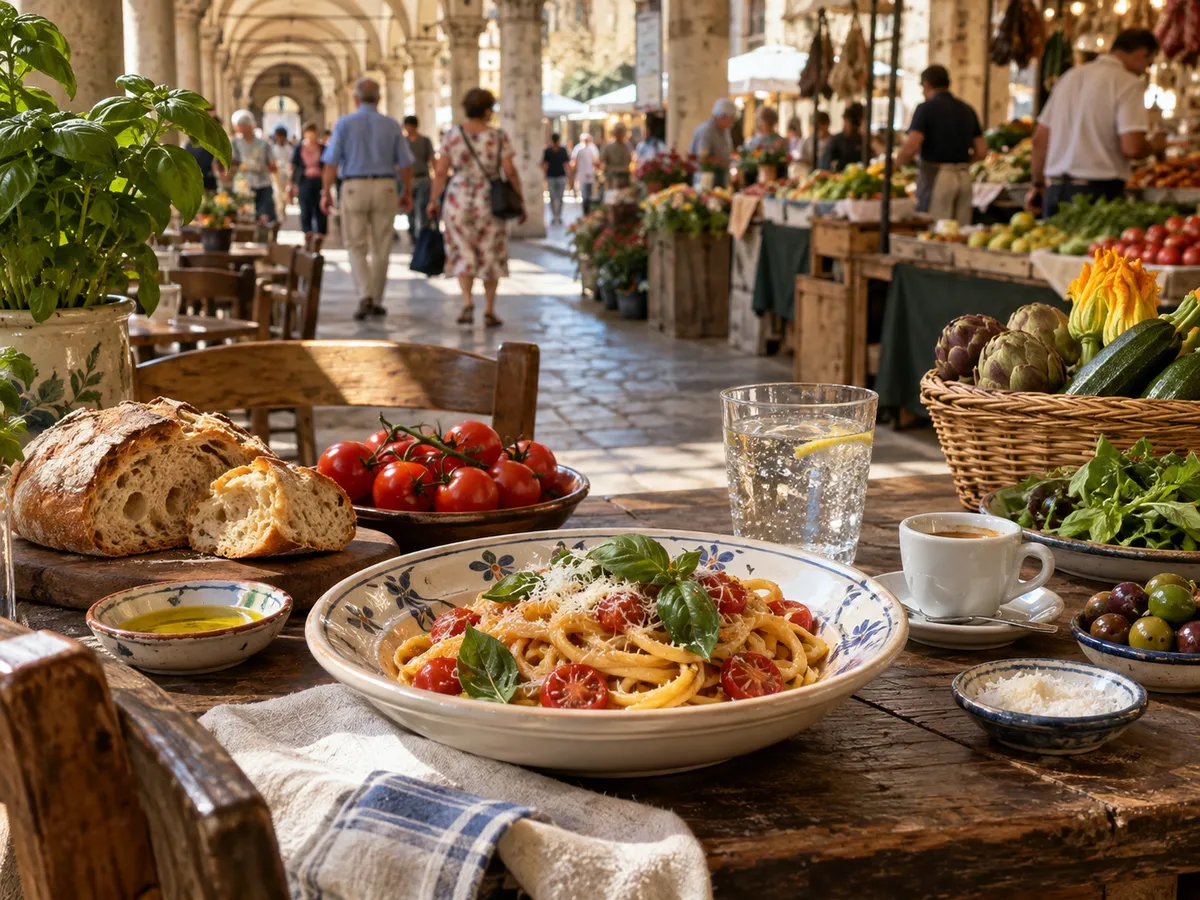
Italy's best meals rarely happen where the crowds are. They happen on a slower clock, in a neighbourhood shop, at a counter where nobody is photographing the plate. This guide pulls the food-related advice from Maria Pasquale, author of "How to be Italian", whose 15 tips for travelling Italy like a local were published by Qantas. Pasquale's list covers slowing down, leaving the hotspots and living by everyday Italian rhythms. Six of her tips speak directly to eating, and they are what you can put into practice on your next trip.
To be clear about scope: the original list has 15 items, but only the headline of each is available here. What follows is how those headlines apply at the table, and the practical reading is mine, not hers.
Start with the pace: slow down your itinerary
Two of Pasquale's tips are about time: slow down your itinerary, and avoid over-planning every hour. Food is where this pays off first. A packed schedule pushes you toward whatever is nearest and fastest, which in busy areas usually means the places built for passing crowds.
A practical way to apply it:
- Plan one anchor per day, such as a museum or a village, and leave the rest open.
- Leave a gap before meals so you can walk around and choose a place rather than grab the first one.
- Accept that you will skip something. That is the trade.
Follow Italian dining rhythms
Pasquale's fourth tip is to follow Italian dining rhythms. Her headline doesn't spell out the hours, so check locally rather than assuming. The principle is simple: eat when the people around you eat. If a restaurant is empty of locals, ask yourself why, and adjust your schedule to match the town instead of expecting the town to match you.
A good habit is to watch what your hotel, café or the shops nearby do around midday and evening, then plan meals around that.
Make time for coffee culture
Coffee culture gets its own spot on the list (tip 11). Treat coffee as a stop in the day's routine rather than a drink you carry while sightseeing. Pause, drink, watch the room. You will learn more about a neighbourhood in ten minutes at a local café than in an hour with a map.
It also fits the list's wider theme, connecting with locals through daily rituals (tip 14). Small repeated rituals are the easiest way in. Go to the same place twice and the second visit feels different.
Visit markets and small food shops
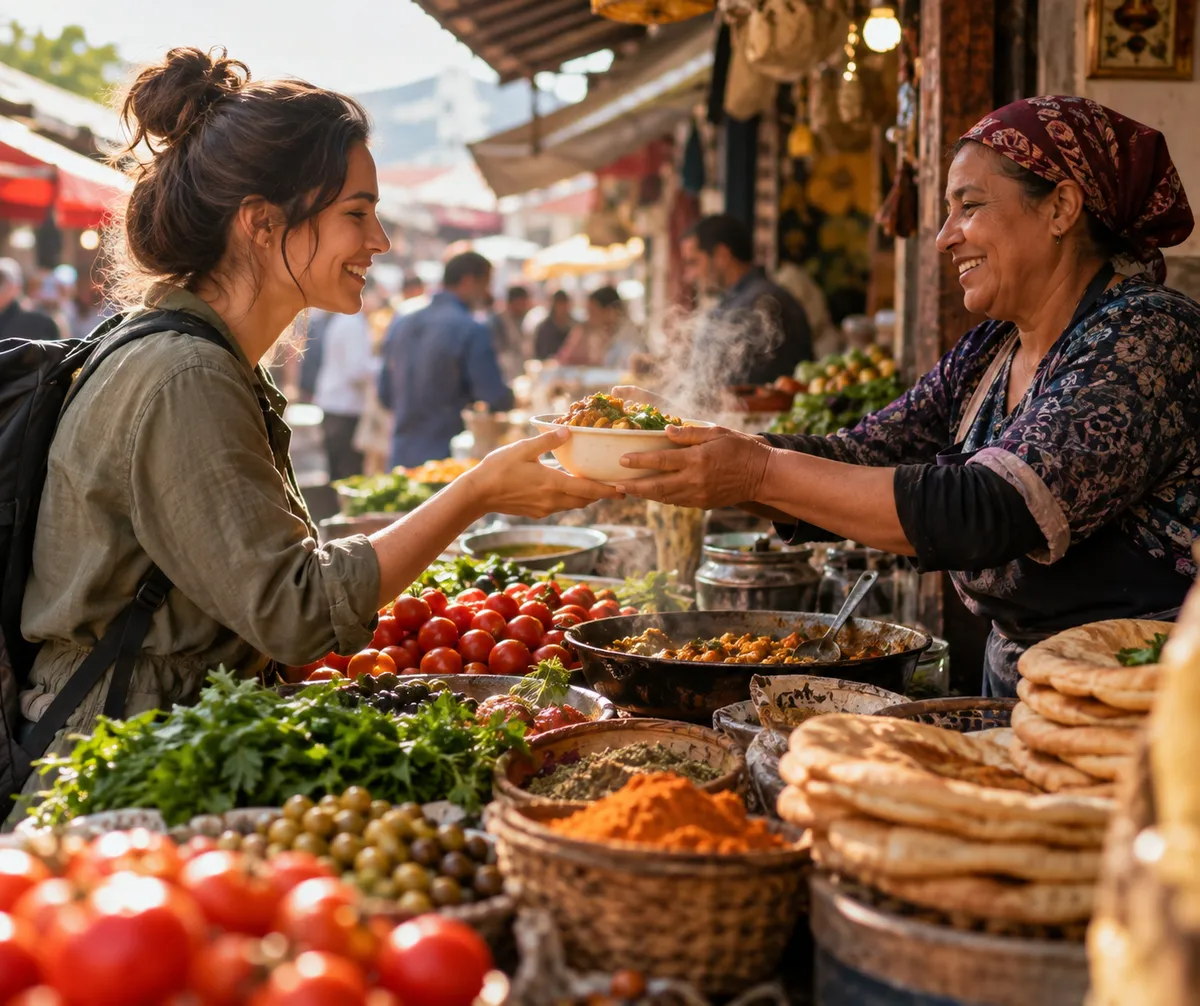
Tip seven is to visit markets and small food shops. For a food-led traveller this is the best return on your time. Markets show you what is actually in season and what the region takes pride in, and they usually sit in real neighbourhoods rather than tourist centres, which ties to tip three, spending time in local neighbourhoods.
How to use them well:
- Go with a loose plan to browse, not a shopping list.
- Look at what the stalls near you are selling the most of. That is a clue to what locals cook.
- Use a few Italian phrases (tip six). Even a greeting and a thank you changes the exchange.
- Buy something small to eat on the spot or later, such as a picnic of what caught your eye.
Choose regional dishes
Tip eight says to choose regional dishes. The logic is straightforward: a menu that sticks to local specialities tells you where you are, while a menu that lists everything from everywhere tells you it is aimed at tourists. When you travel, order what the place is known for and ask what is typical. This is also a reason for tip 13, exploring beyond the big cities. Smaller towns tend to be where regional cooking is least diluted, though the original list doesn't name specific dishes or towns, so ask locally.
If you want to go deeper, pick one dish per region and follow it for the trip, comparing how different kitchens handle it.
Embrace the passeggiata
Tip five is the passeggiata, the leisurely stroll Italians take as part of daily life. Pair it with food: walk before a meal to build the mood, or after to let it settle. It is a free, easy way to join the local rhythm, and it shows you where people actually gather, which is useful when you're choosing somewhere to eat later.
Why this matters now
Per the Qantas piece's framing, travellers are looking for slower, more authentic trips as overtourism reshapes popular destinations such as Rome, Venice and Florence. Eating the local way is one of the most direct responses. Your money goes to small shops and neighbourhood places, and you spread out rather than adding to the same crowded streets.
Two more of Pasquale's tips help here: take detours from tourist hotspots (tip two) and respect local customs (tip ten). You don't have to skip the famous sights. Visit them, then eat somewhere else.
A simple one-day plan
To make the advice concrete, here is one way to combine it:
- Morning: Coffee at a neighbourhood café, standing or sitting as the locals do.
- Late morning: A market or small food shop. Pick up something regional.
- Midday: A meal timed to local habits, ordering a regional dish.
- Afternoon: One sight, nothing more.
- Evening: A passeggiata, then dinner at a place you noticed on the walk.
If you can, get between towns by train (tip nine), which fits the slower pace and drops you in the middle of town.
The takeaway
Pasquale's final tip is to do as the Romans do. At the table, that means one thing: before you choose where to eat, spend ten minutes watching where everyone else is going.