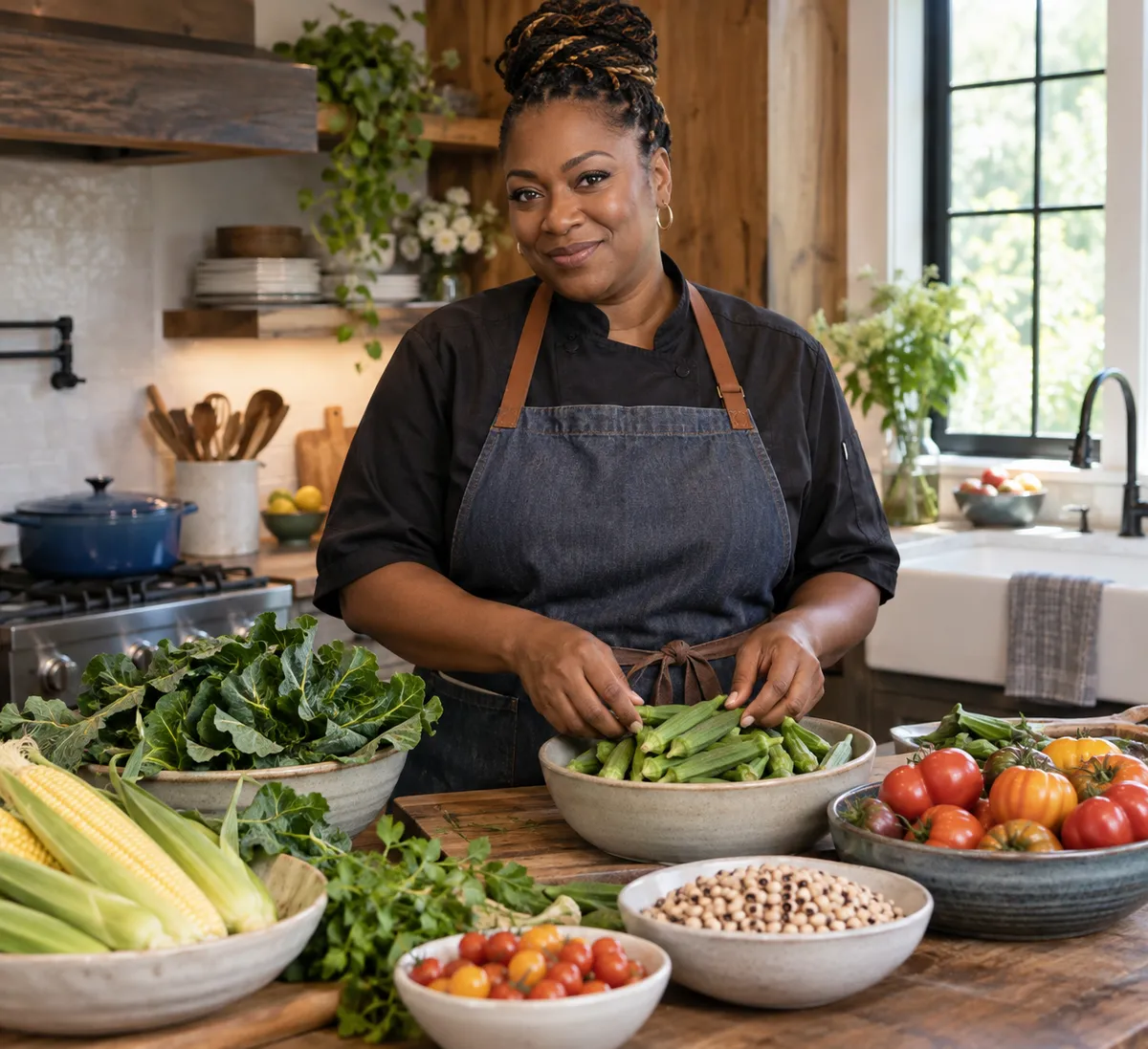
Think of Southern food and you probably picture something fried, smothered, or buried in butter. Texas-based chef and restaurateur Tiffany Derry wants you to look again. In remarks reported by Fox News, Derry challenged common assumptions about what is traditionally served across the South, pointing to wholesome ingredients, colorful vegetables, and simple preparation.
By the end of this piece, you'll have a different lens for reading a Southern menu, a market stall, or your own kitchen: one that starts with the produce, not the stereotype.
The Myth: Southern Food Means Heavy Food
The stereotype is easy to spot. Southern cooking gets reduced to a short list of rich, indulgent plates, and that list becomes the whole story.
Derry's argument, per Fox News, is that this picture leaves out most of the table. Traditional Southern cooking, as she frames it, is fresh and colorful, built on simple, wholesome ingredients. The heavy image is a cliché, not a full description.
That doesn't mean rich dishes aren't part of the cuisine. It means they're one part of it, and treating them as the whole misses what the region actually cooks and eats.
Start With the Vegetables
The most useful shift Derry's perspective offers is where you put your attention. Read a Southern menu vegetable-first.
- Check the sides before the mains. In the way Derry describes the cuisine, colorful vegetables are central, not an afterthought.
- Look for plates built from several vegetables. A table with a range of colors is closer to her picture of Southern cooking than a single heavy entrée.
- Ask what's in season. Cooking around fresh produce is the logic behind the wholesome, simple approach she describes.
If you're traveling, this changes how you choose where to eat. A restaurant that makes its vegetables a point of pride is telling you something about how it understands the region.
Simple Preparation Is the Point
Derry also emphasizes simple preparation. That's a useful clue for both diners and home cooks.
Simple doesn't mean boring. When the ingredients are fresh and wholesome, they don't need much dressing up. The skill is in knowing when to stop.
For home cooking, that translates into a few practical habits:
- Pick the best produce you can find, ideally what looks freshest at your local market.
- Keep the number of ingredients small enough that each one can still be tasted.
- Let color guide the plate. If everything on it is beige, add something green, red, or orange.
These steps are my own reading of the principle, not a recipe from Derry, but they follow directly from the emphasis on wholesome ingredients and simplicity.
How Tradition and Perception Fit Together
There's a quiet tension in Derry's message. She's honoring tradition while pushing back on how that tradition is perceived. Those aren't opposites.
Challenging a stereotype isn't the same as reinventing the food. The argument is that the cuisine was never as one-dimensional as its reputation suggests. Per Fox News, the conversation fits a wider interest in rethinking comfort food through health, heritage, and authenticity.
For travelers, that's an invitation to be curious. When you visit the South, or a Southern restaurant near you, you're not looking for the "healthy version" of the cuisine. You're looking for the part of it that was always there.
How to Eat Southern Food Like You Mean It
You don't need a plane ticket to try this. A few moves work anywhere:
- Order a vegetable-heavy plate. Choose several sides and see how they play together.
- Talk to the people serving it. Ask which dishes they'd point a first-timer toward, and why.
- Cook one meal at home around a single vegetable. Keep the preparation simple and notice how much flavor the ingredient carries by itself.
- Question your own assumptions. If your mental image of Southern food is one color, it's incomplete.
The Takeaway
Next time you sit down to Southern food, start with the vegetables and work outward. If Derry is right, that's not a detour from the tradition. It's the way in.