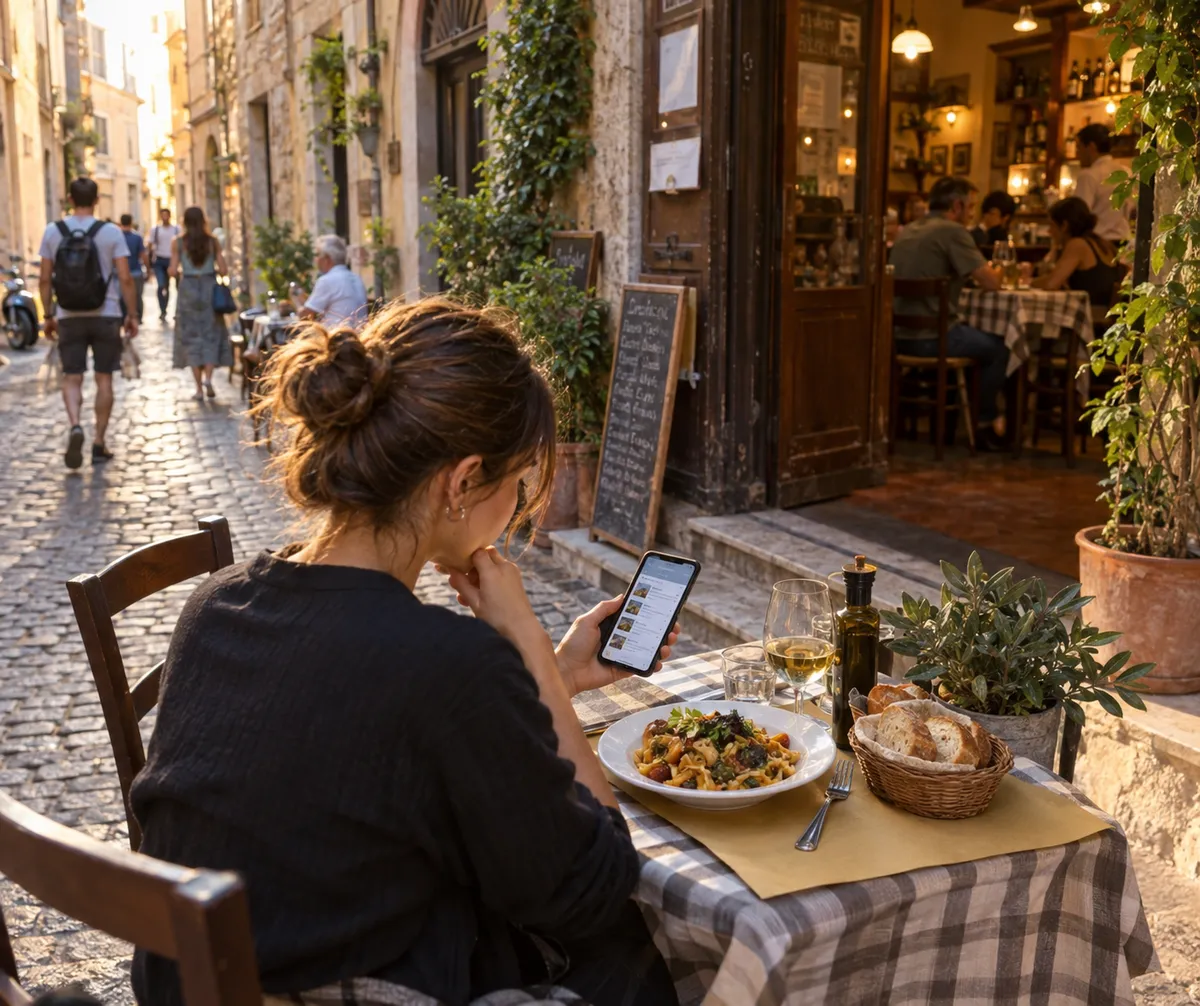
The New York Times recently ran a guide on how to choose a restaurant when you're traveling, and the premise is easy to relate to. Dining has become a big part of trip planning, and between social media hype, online reviews, and hard-to-get reservations, every meal can feel like it carries too much weight. The original article sits behind its own pages, so what follows is not a summary of it. It's a decision framework built around the same problem, with a food-first angle: choose the meal that tells you something about where you are.
By the end, you'll have a short routine for picking dinner quickly, a way to read reviews without spiraling, and a clear rule for deciding between a splurge and a casual find.
Start With the Dish, Not the Restaurant
The fastest way to land somewhere good is to decide what you want to eat before you decide where. Pick one regional dish or ingredient the place is known for. Ask yourself what the destination does that your hometown doesn't.
That single question narrows the field. You stop scrolling "best restaurants in [city]" lists, which tend to surface the same famous names, and start looking for the places that do one specific thing well. A restaurant that is built around a regional dish usually has something to say about it. A menu that tries to cover every cuisine for every visitor usually doesn't.
Use Reviews as a Filter, Not a Verdict
Reviews are most useful when you ask less of them. Don't try to find the highest-rated restaurant in town. Try to rule out the obvious misses.
What to look for
- Specifics. Reviews that name dishes, describe the room, or mention what a server recommended are more informative than "amazing, five stars."
- Patterns. One complaint about slow service is noise. Ten people mentioning the same problem is information.
- Who is writing. If reviews are all in one language and all about the view, you may be looking at a place built for visitors. Reviews that mention particular dishes in detail suggest people came for the food.
What to ignore
Ignore the exact score difference between a 4.5 and a 4.7. Ignore viral videos as your only evidence. Hype can fill a room without the kitchen being any good, and it can also make a decent restaurant feel disappointing because expectations ran too high.
Give yourself a time limit. Ten minutes of research per meal is plenty; after that you are mostly generating anxiety.
Read the Local Cues When You Arrive
Online research gets you a shortlist. Your eyes finish the job. Walk past before you commit and check a few things:
- The menu. Is it focused, with dishes you can tie to the region? Or is it huge, translated into six languages, with photos of every plate?
- The crowd. Do you see locals, families, or people on a lunch break? A mix is a good sign. An empty room at a normal mealtime is worth a second thought.
- The pitch. A host standing outside trying to pull you in is a classic tourist-trap signal. Places with good food rarely need to chase you down the sidewalk.
- The location. Restaurants sitting right beside the biggest landmark are often charging for the view. Walking a few blocks away frequently changes the menu, the prices, and the clientele.
None of these is proof by itself. Treat them as a checklist where two or three red flags together tell you to keep walking.
Decide: Splurge Meal or Casual Gem?
You probably can't do a big reservation-only dinner every night, and you wouldn't want to. Plan your trip with a rhythm instead.
Choose a splurge when the restaurant is the reason for the trip, or when it offers something you truly can't get elsewhere, such as a regional tasting menu or a chef who works with local ingredients. Book it early, since reservation scarcity is part of why choosing has felt higher-stakes lately.
Choose a casual spot when you want to eat what residents eat on an ordinary day: a market stall, a neighborhood counter, a place that does one dish. These meals often teach you more about a city than the fancy one does.
A workable pattern is one planned, bookable meal for every few days, with the rest left open. That balances the famous spot you'd regret skipping against the room for spontaneous finds.
Leave Space for Spontaneity
Planning too tightly can backfire. If every meal is booked, you lose the chance to follow your nose into a place that smells incredible or to take a local's offhand tip. Keep at least a couple of meals unplanned, with two backup options saved on your map in case you need them.
Ask people you meet where they eat. Hotel staff, shop owners, and market vendors will often point you somewhere better than a ranked list, especially if you ask a specific question like "where would you go for [regional dish]?" instead of "where should I eat?"
A Quick Checklist for Picking Dinner Fast
When you're hungry and deciding on the spot, run through this:
- What regional dish do I want tonight?
- Does a quick review scan show specific praise for that kind of food?
- Is the menu focused, and are there locals eating?
- Is it a few blocks from the main tourist draw?
- Does it fit tonight's mood and budget, splurge or casual?
If you can answer yes to most of these, sit down. A good enough meal that you enjoy beats a perfect one you spent an hour hunting for.
The Takeaway
Before your next trip, pick one dish you want to find and let it guide your choices. The restaurant that serves it well, whether it's a white-tablecloth room or a counter with six stools, is the one worth your evening.