You can follow a recipe perfectly and still end up with a flat-tasting dinner. According to Carmen Perr, the Los Angeles-based author of "Cook What Grows," the problem often starts before you ever turn on the stove. Better home cooking, she argues, begins with how you shop, as Fox News reported.
Her approach, as described in that report, comes down to three things you already have: your hands, your eyes and your nose. Here is how to put texture, color and aroma to work the next time you walk into a market.
Why the Market Is Step One
Perr's core idea is that ingredient quality shapes a meal before any technique comes into play. Per Fox News, she encourages shoppers to pay attention to texture, color and aroma when choosing fruits, vegetables and herbs.
That is good news if you feel intimidated by recipes or rely heavily on labels. A senses-first habit works at a farmers market, a neighborhood grocer or a big supermarket, and it costs nothing.
Use Texture: Pick It Up
Texture is the cue you get by touching, and it is the one most shoppers skip because they are in a hurry. Make it a habit to handle produce rather than grabbing the first item in the pile.
A few practical ways to apply it:
- Pick up two or three of the same item and compare them. Differences in firmness and feel become obvious side by side.
- Hold, don't squeeze hard. Gentle pressure tells you plenty and keeps the produce intact for the next shopper.
- Handle herbs too. Look and feel for leaves that seem fresh rather than limp.
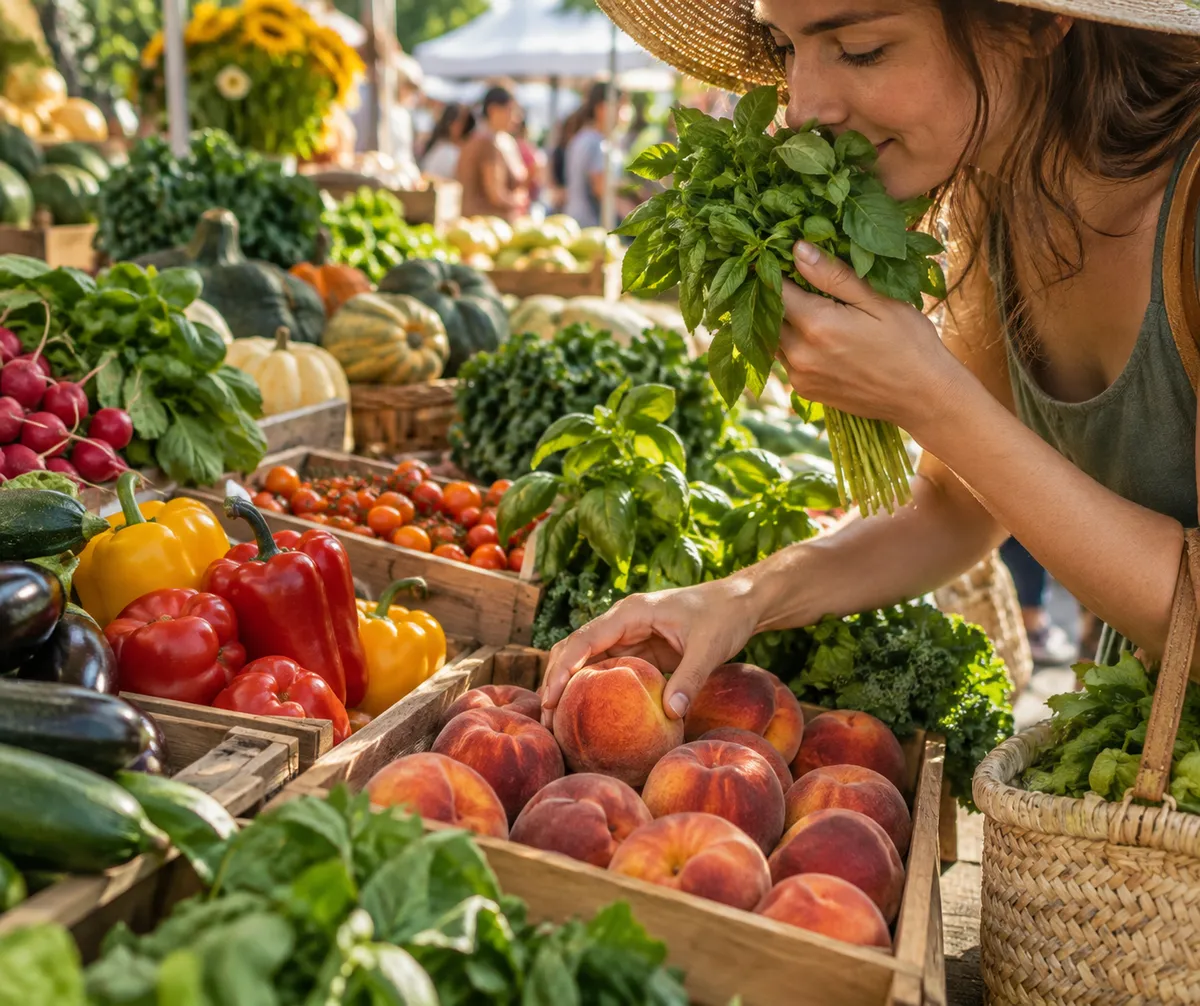
Perr's brief advice here is to notice texture. How you interpret it will vary by item, so treat each shopping trip as practice and note what a great peach or bunch of basil feels like.
Use Color: Look Closely
Color is the quickest filter. Before you touch anything, scan the display and see what stands out as vivid and what looks dull.
Try this:
- Scan the whole display first, then zoom in on individual pieces.
- Compare similar items and favor the ones that look most vibrant and healthy.
- Check for anything that looks off, then move on to the next option.
Color works best alongside the other senses. A good-looking tomato that has no scent or feels wrong in your hand deserves a second thought.
Use Aroma: Smell Before You Buy
Aroma may be the most underused tool in the produce aisle. Perr points shoppers toward it as a quality signal, and it is especially useful for herbs and fruit, where fragrance is part of the flavor you are paying for.
Bring the item close and take a real sniff. If you smell something fresh and characteristic of that ingredient, that is a good sign. If you smell very little, consider whether another option is better.
Combine All Three
No single cue settles it. The practical routine looks like this:
- Look at the color across the display.
- Touch a few candidates and compare.
- Smell your top choice before it goes in the bag.
This takes perhaps ten extra seconds per item. Over a week of cooking, that adds up to noticeably better ingredients without changing a single recipe.
Why This Helps Right Now
More people are looking to cook affordably and seasonally at home, and interest in farmers markets, fresh ingredients and low-waste cooking keeps growing. Choosing well supports all of that. Produce you picked carefully is more likely to taste good, which makes it more likely you will actually eat it. That is a quiet way to cut waste, though that connection is my own observation rather than a claim from Perr.
A Market-to-Table Habit for Beginners
If farmers markets feel unfamiliar, start small:
- Choose just three items to evaluate carefully on your first visit.
- Let what looks and smells best guide your meal, rather than arriving with a rigid list.
- Cook the best thing simply, then notice what you taste.
That last step is the payoff. Tasting a well-chosen ingredient with little done to it teaches you what quality means faster than any article can.
Your Next Step
On your next shopping trip, skip the autopilot. Pick one fruit, one vegetable and one herb, and judge each by feel, color and smell before you buy. Then cook them and see what changed.