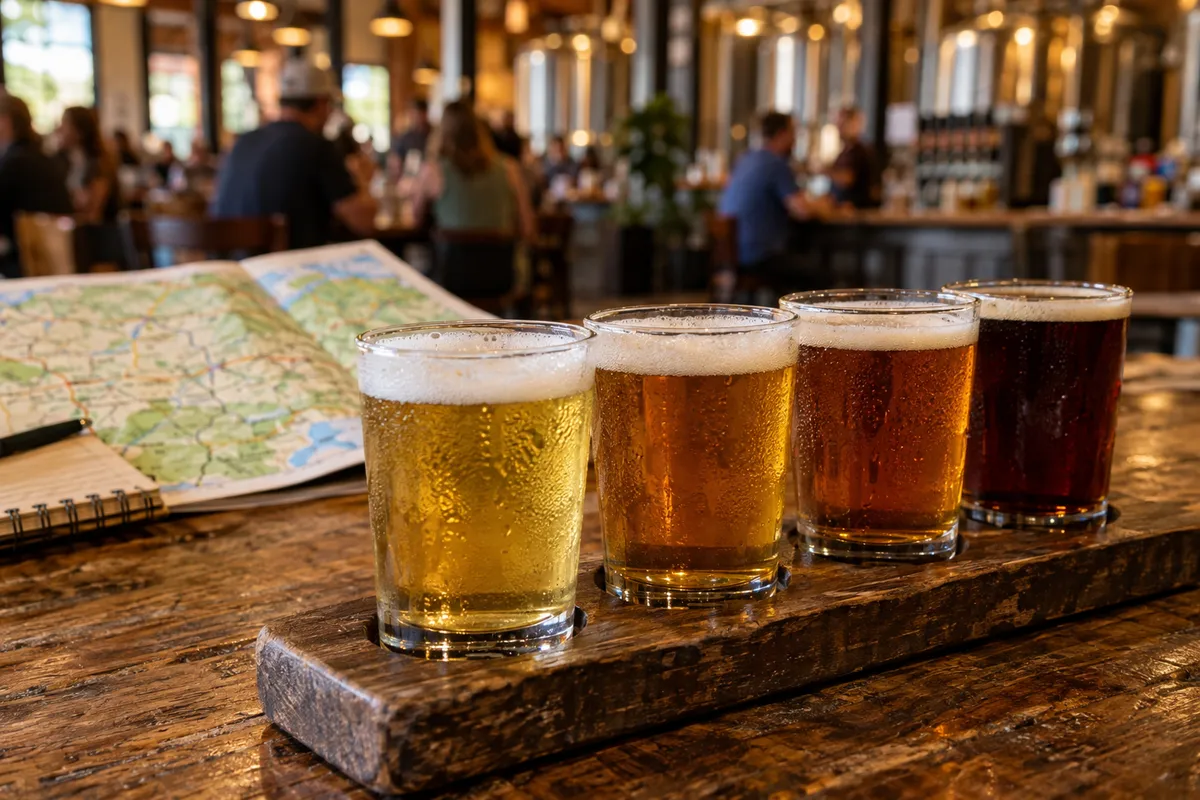
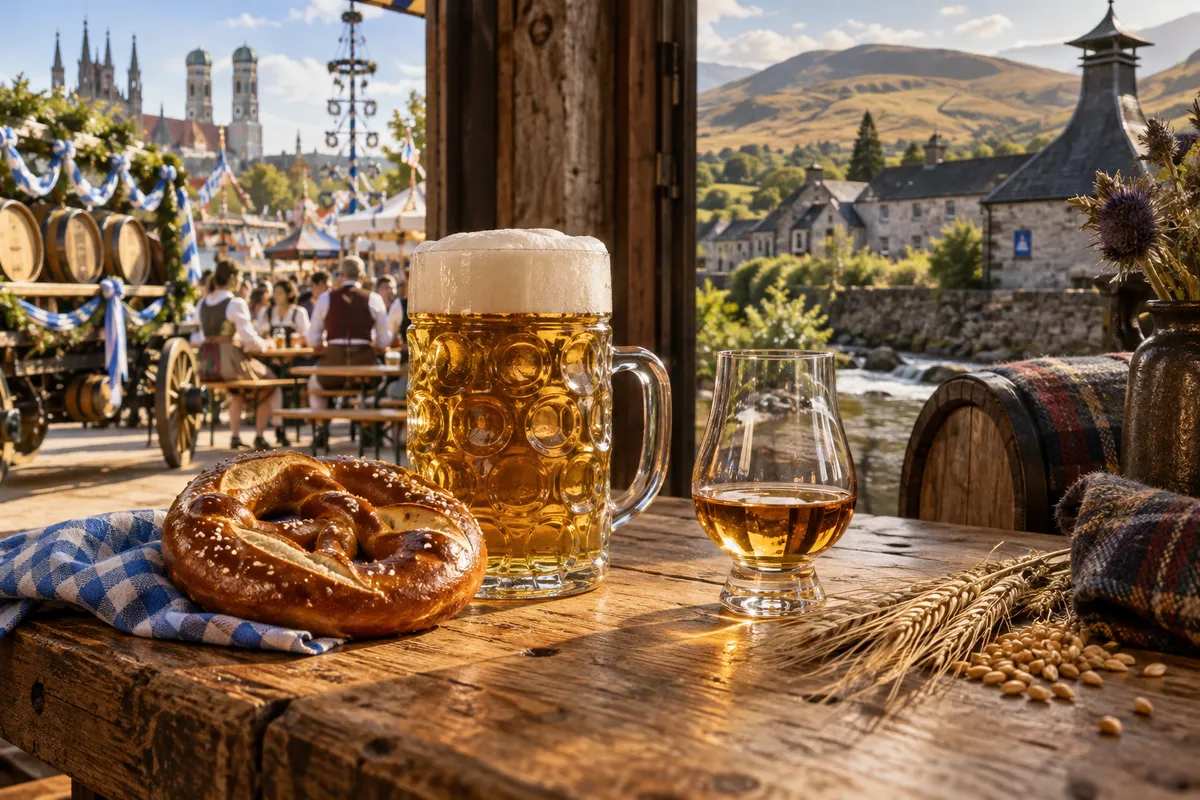
A beer in your local bar and a beer in a Munich tent during Oktoberfest may share a style. They do not share an experience. That gap is the subject of a Forbes piece on provenance, and it holds a useful idea for anyone planning a trip: pick your destination by what you want to eat or drink, then go where it comes from.
By the end of this article, you'll know what provenance means in practical terms, why it changes how a meal or a pour feels, and how to build a trip around it.
What provenance actually means
Provenance is where something is made, who makes it, and the culture around it. That's how Forbes frames it, and the definition is more useful than it sounds. It gives you three questions to ask about any food or drink you care about:
- Where is it made?
- Who makes it?
- What traditions surround it?
If you can answer all three, you have the outline of a trip. If a product has strong answers to all three, there's probably a place worth visiting.
Oktoberfest is the blueprint
Forbes points to Munich's Oktoberfest as an example of food and drink tied tightly to place. Beer is the product, but the draw is the setting, the ritual and the culture around it. People don't travel to Munich only for something they could pour at home. They go for the full context.
That's the lesson to borrow. When you choose a festival or destination, look for one where the product and the place can't be separated. If the event would feel the same in any city, the provenance is thin. If it only makes sense where it happens, you've found something worth the airfare.
Scotland shows the same idea in a quieter form
The article pairs Munich with Scotland's whisky trail. The product differs, and the mood does too, but the logic is the same. Whisky tourism lets you stand where the drink is made and understand it as part of a landscape and a community, not just a label on a bottle.
This matters if you're a casual drinker. You don't need expert palate training to get value from a distillery visit. The context does the work: seeing where something comes from gives you a reason to pay attention to what's in the glass.
Why provenance makes things feel premium
The core argument in Forbes is that knowing the origin adds value, authenticity and emotional pull. Notice that none of those is strictly about flavor. Our read: a meal you connect to a person and a place becomes a memory, and memories are what travelers are really buying.
It also explains why brands, regions and creators are leaning on origin stories, per the piece. In crowded food, drink and travel markets, where something comes from is a way to stand out. As a traveler, that works in your favor, since regions with a real story tend to build experiences around it.
How to plan a trip around provenance
Here's a simple process you can use for any dish or drink you love.
1. Start with one product
Pick something you already enjoy: a beer, a whisky, a regional dish. Don't start with a country. Start with the thing you'd happily eat or drink every day.
2. Find where it's actually made
Look for the specific region, not just the country. The Oktoberfest and Scotch whisky examples both point to places with a clear identity, and that specificity is what makes a visit meaningful.
3. Look for the people behind it
Favor itineraries that put you in front of the makers: brewers, distillers, cooks, vendors. The Forbes framing of provenance explicitly includes who makes it, so a stop that lets you see them is worth more than a generic tasting room.
4. Seek out the local rituals
Check how locals actually consume the product. At Oktoberfest that means the festival setting itself. Ask what the equivalent is wherever you're headed, whether that's a seasonal event, a trail or a market.
5. Skip the generic filler
Culinary travel is growing because people want place-based experiences over generic tourism, per the article. Protect your itinerary from sightseeing stops that could be anywhere. Leave room to linger where the food and drink are the point.
A quick test for any destination
Before you book, ask whether the experience would survive being moved to another city. If a festival, a trail or a market only works in its home location, the provenance is real. If it would work equally well anywhere, keep looking.
What to do next
Pick one food or drink you love, find the exact place it comes from, and build a short trip around that single spot. Munich and Scotland are two proven models. Yours might be a much smaller town, and that's fine. The point is to taste it where it was born.